Sideways Bend with Adage Combination
Advanced
Adage
Share
 Advanced | Adage
À la Seconde Extension
 Advanced | Adage
Advanced à la Seconde
 Advanced | Adage
Port de Bras with Écarté
 Advanced | Adage
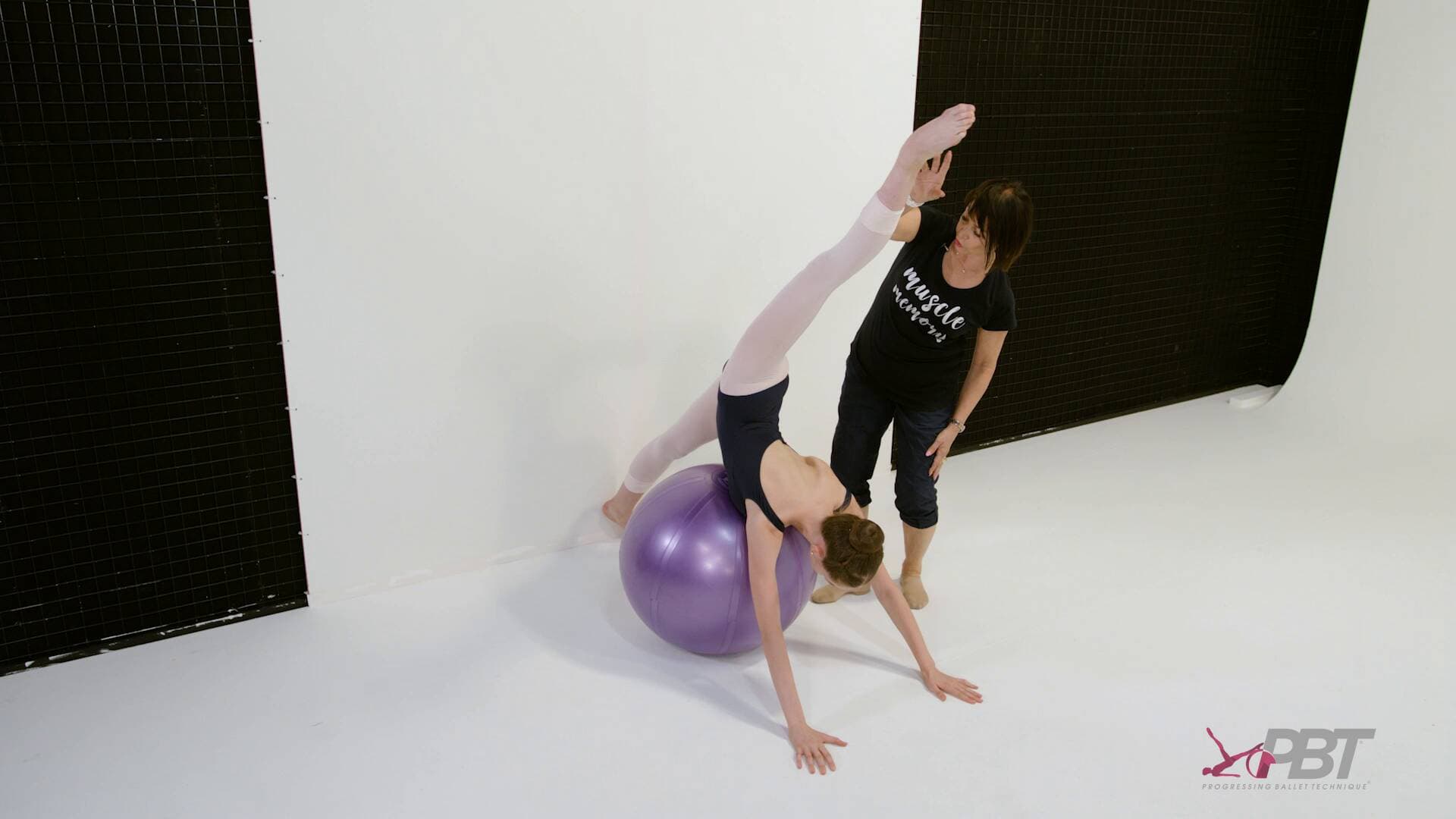
Développé Activation
 Advanced | Adage
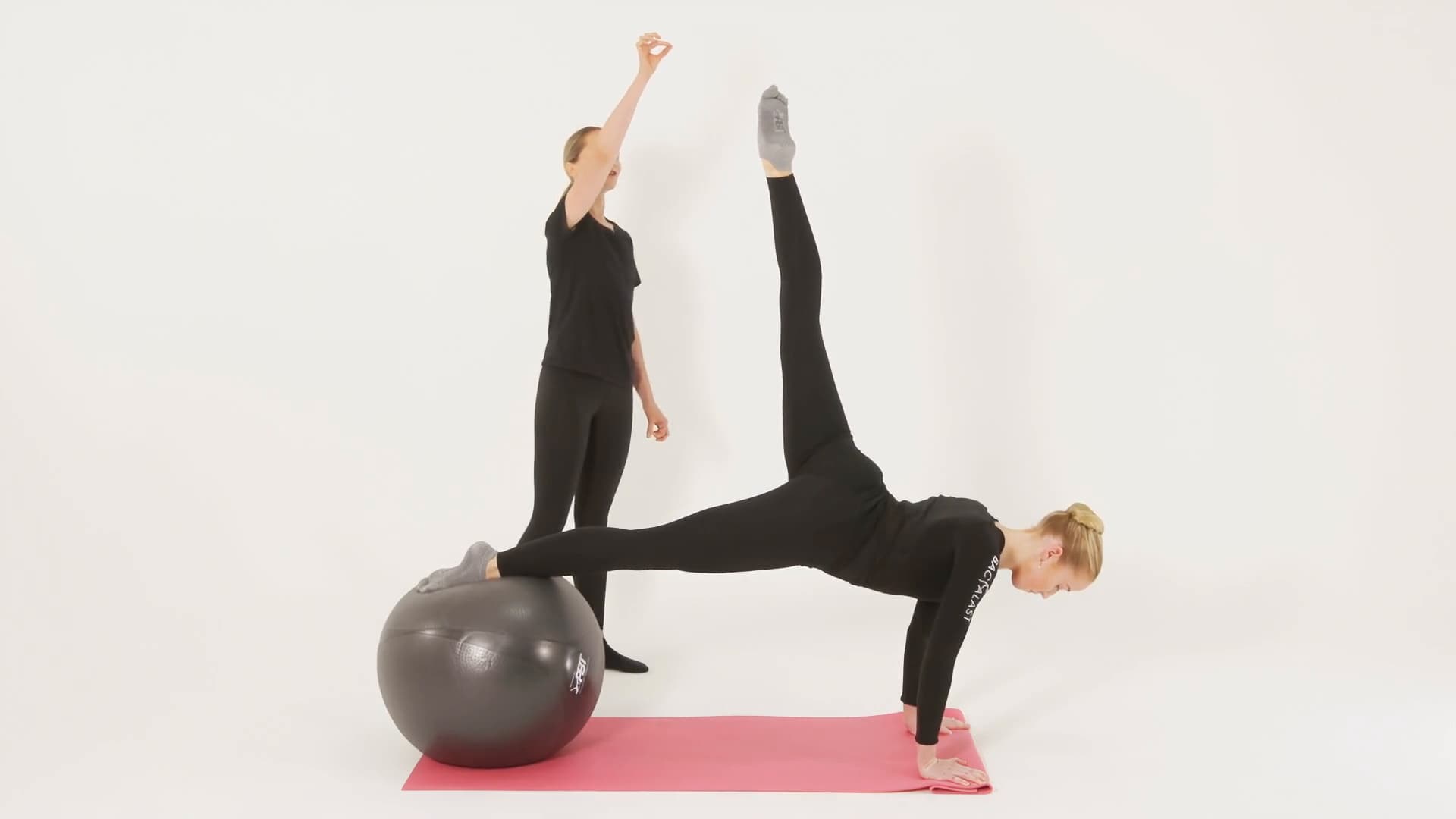
Cambré and Penchée extension
 Advanced | Adage
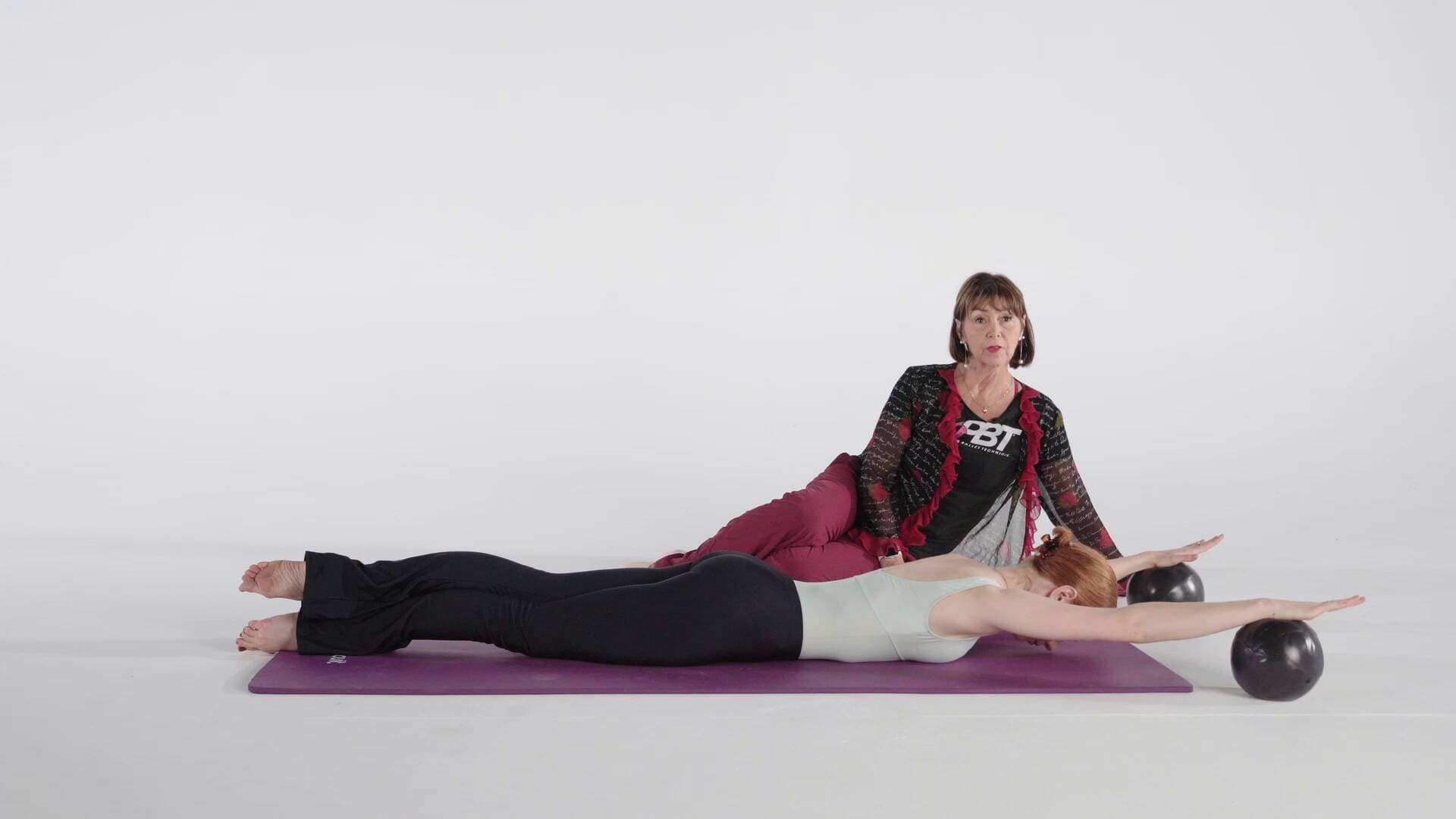
Arabesque Training
 Advanced | Adage
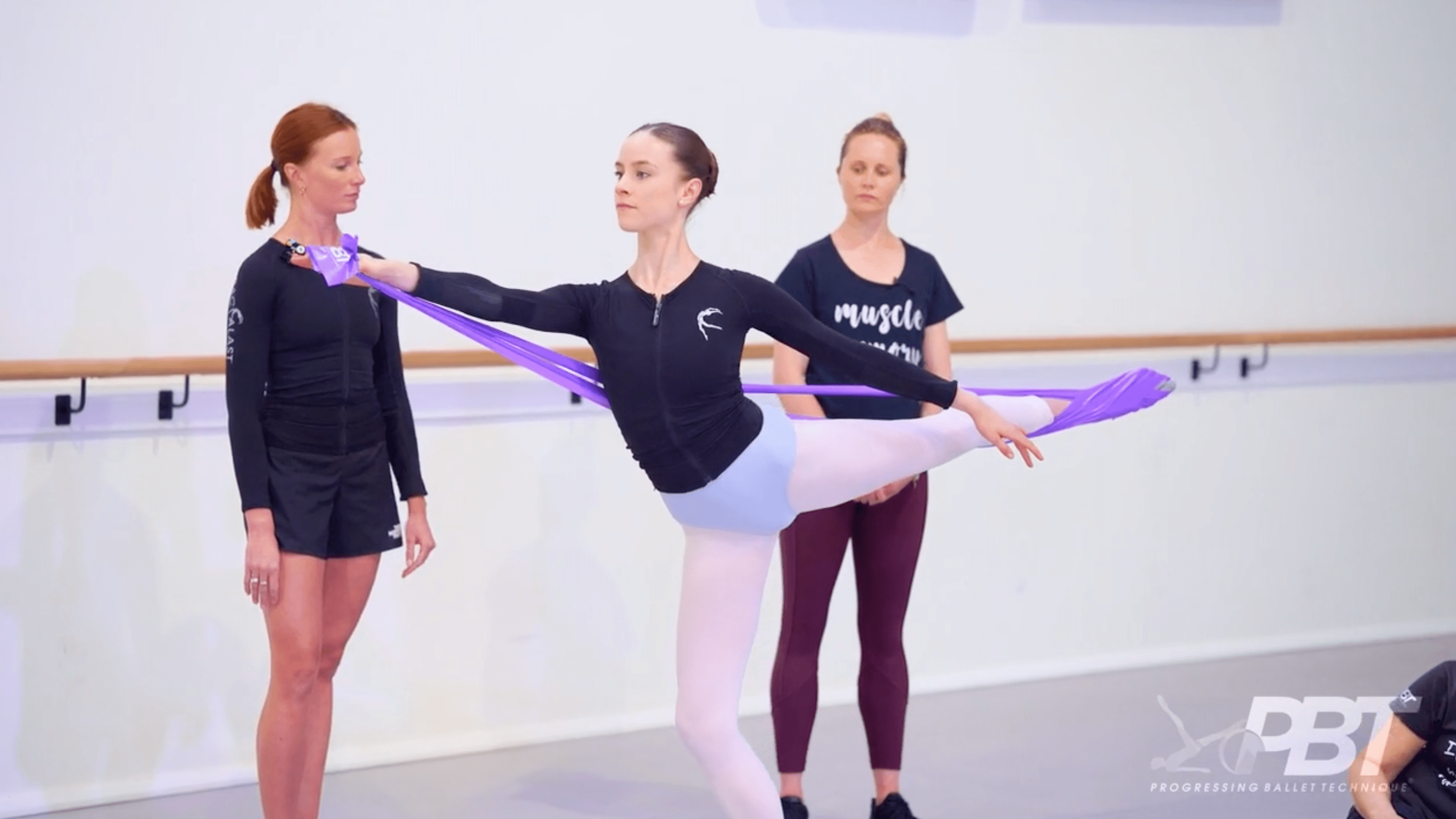
Elongated Arabesque
 Advanced | Adage
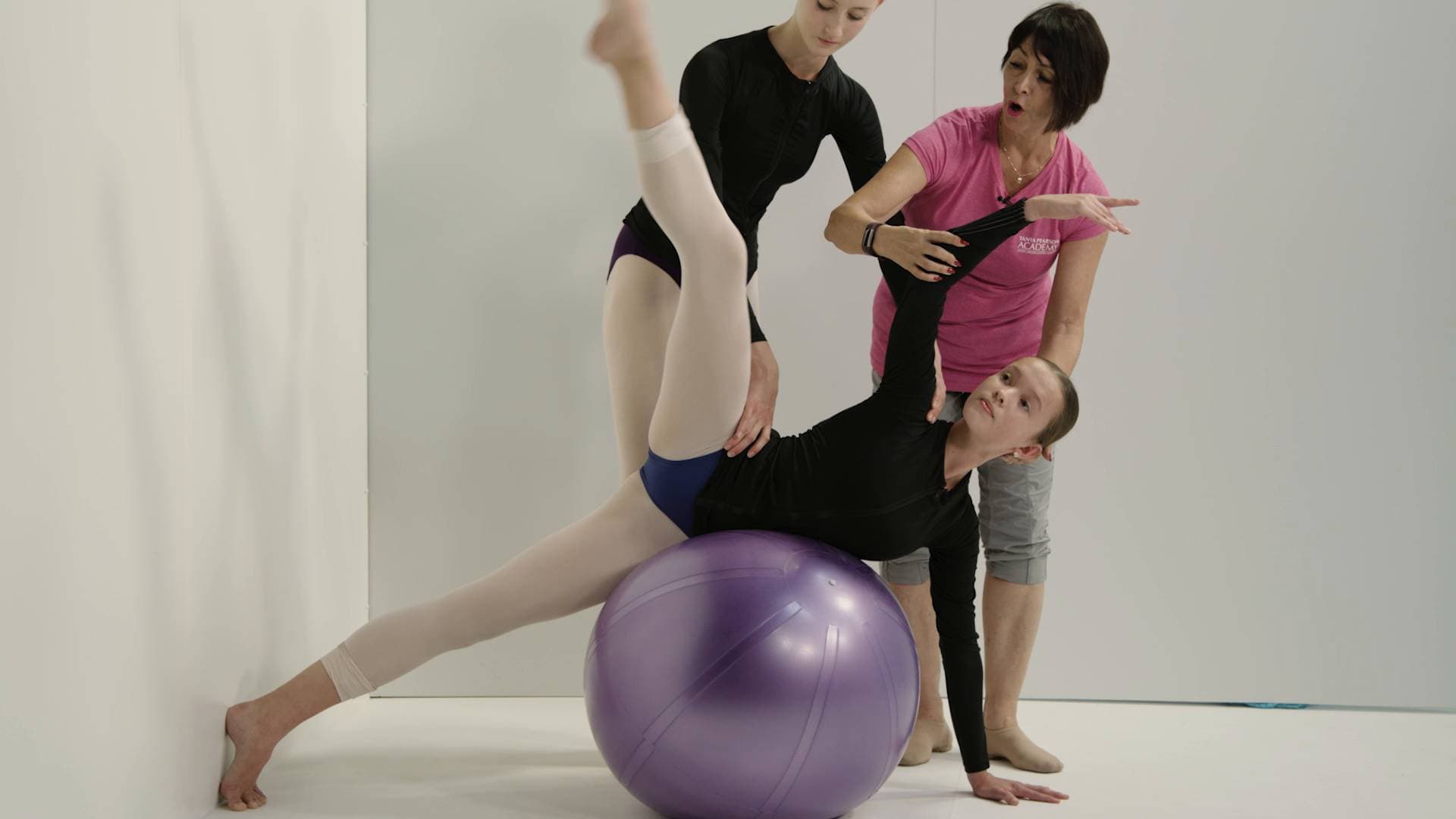
Arabesque Stability
 Advanced | Adage
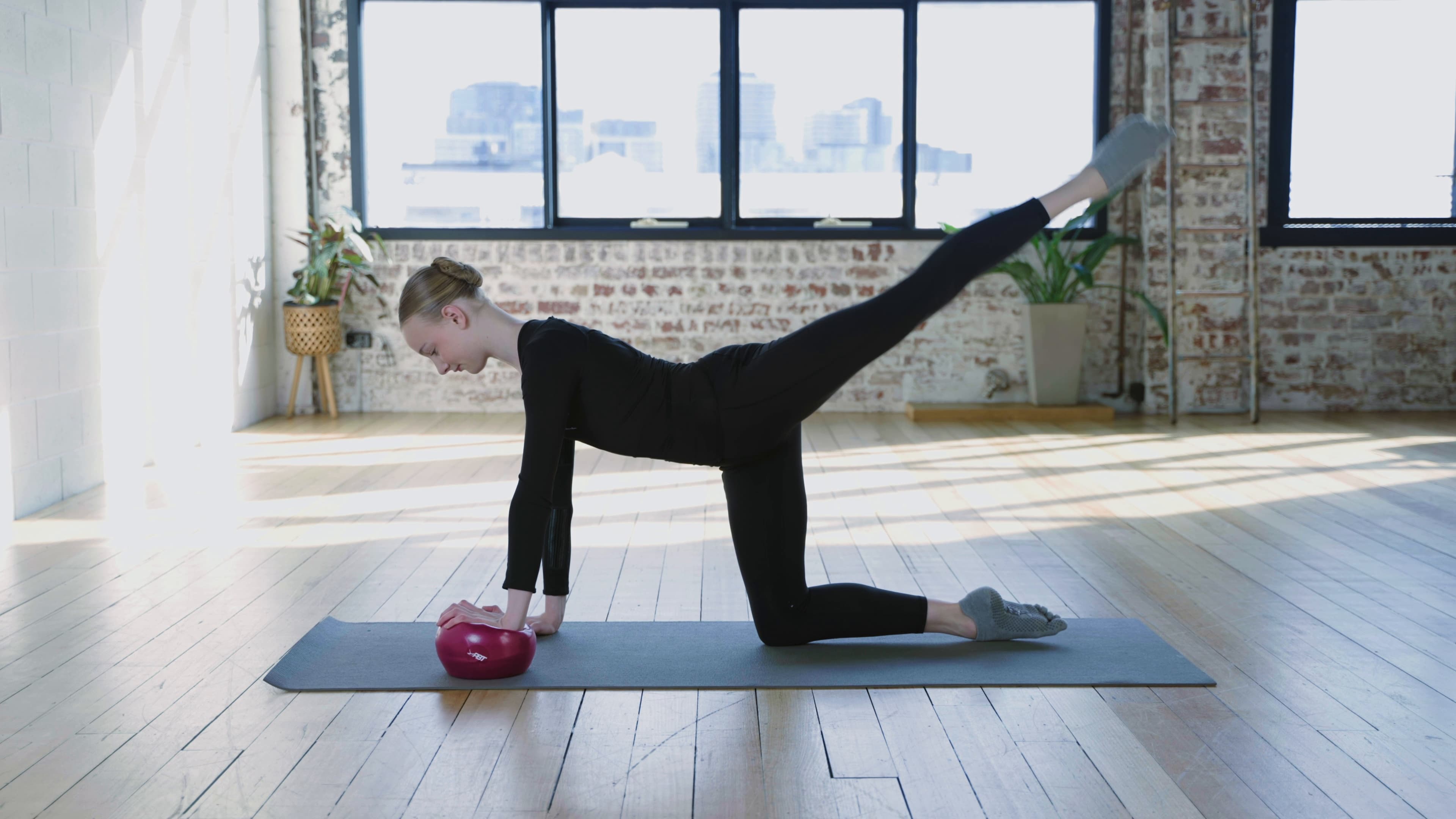
Écarté enhancement
 Advanced | Adage
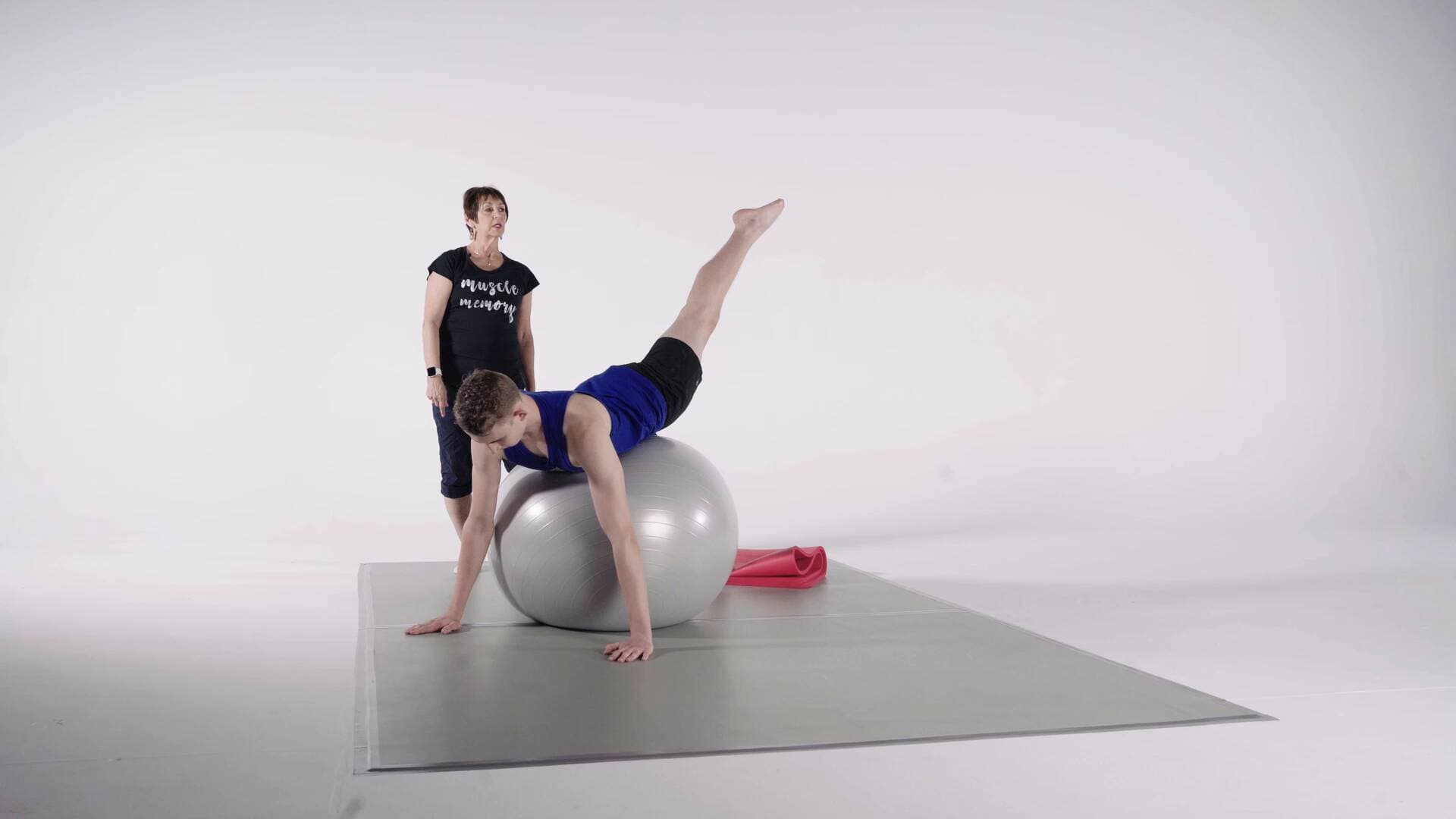
Glutes with Plank
 Advanced | Adage
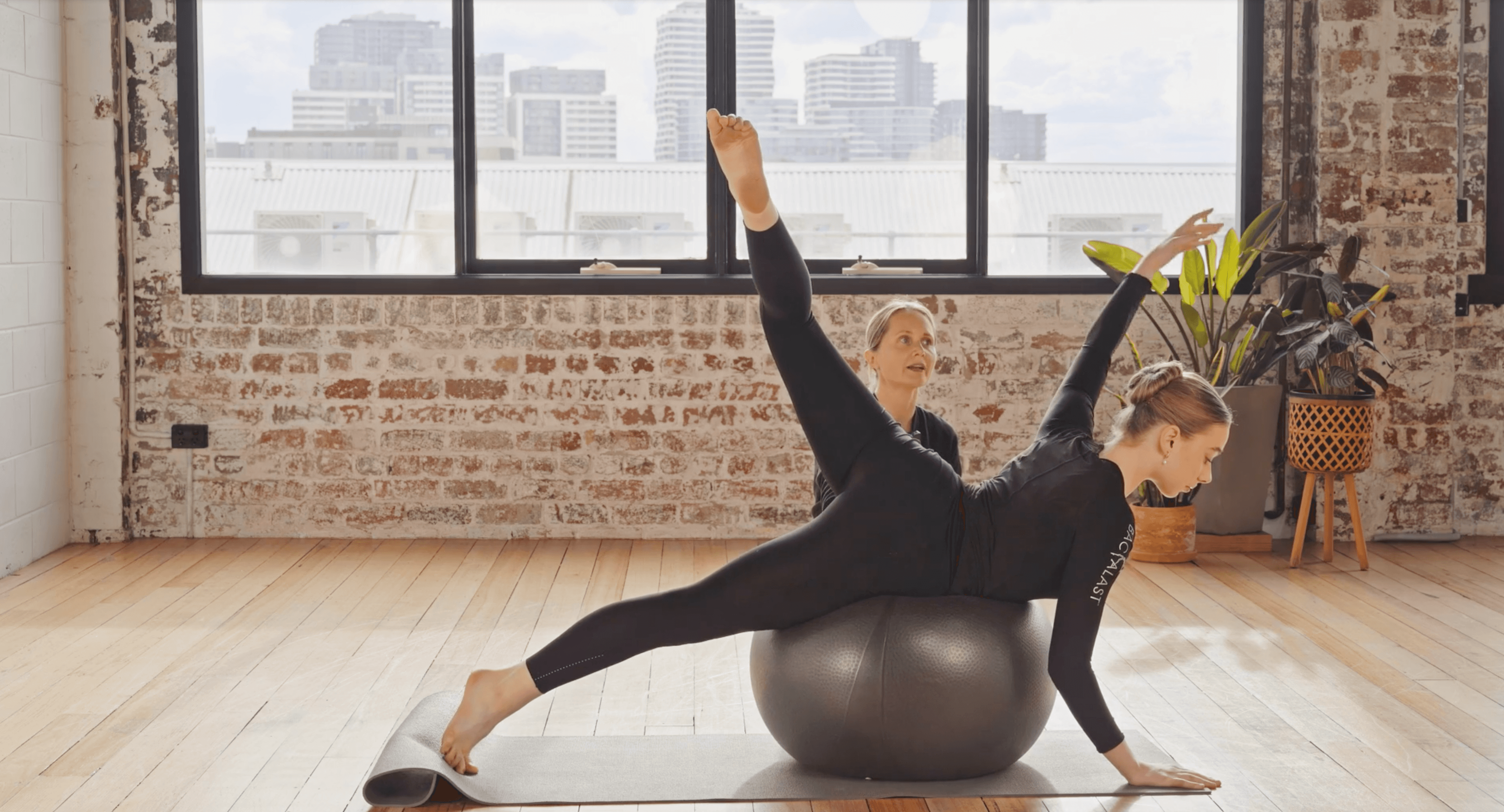
Advanced Derrière Extension
 Advanced | Adage
Renversé - Extension
 Advanced | Adage
Rond de Jambe - Extension
 Advanced | Adage
Grand Adage
 Advanced | Adage
Attitude Renversé Penchée
 Advanced | Adage
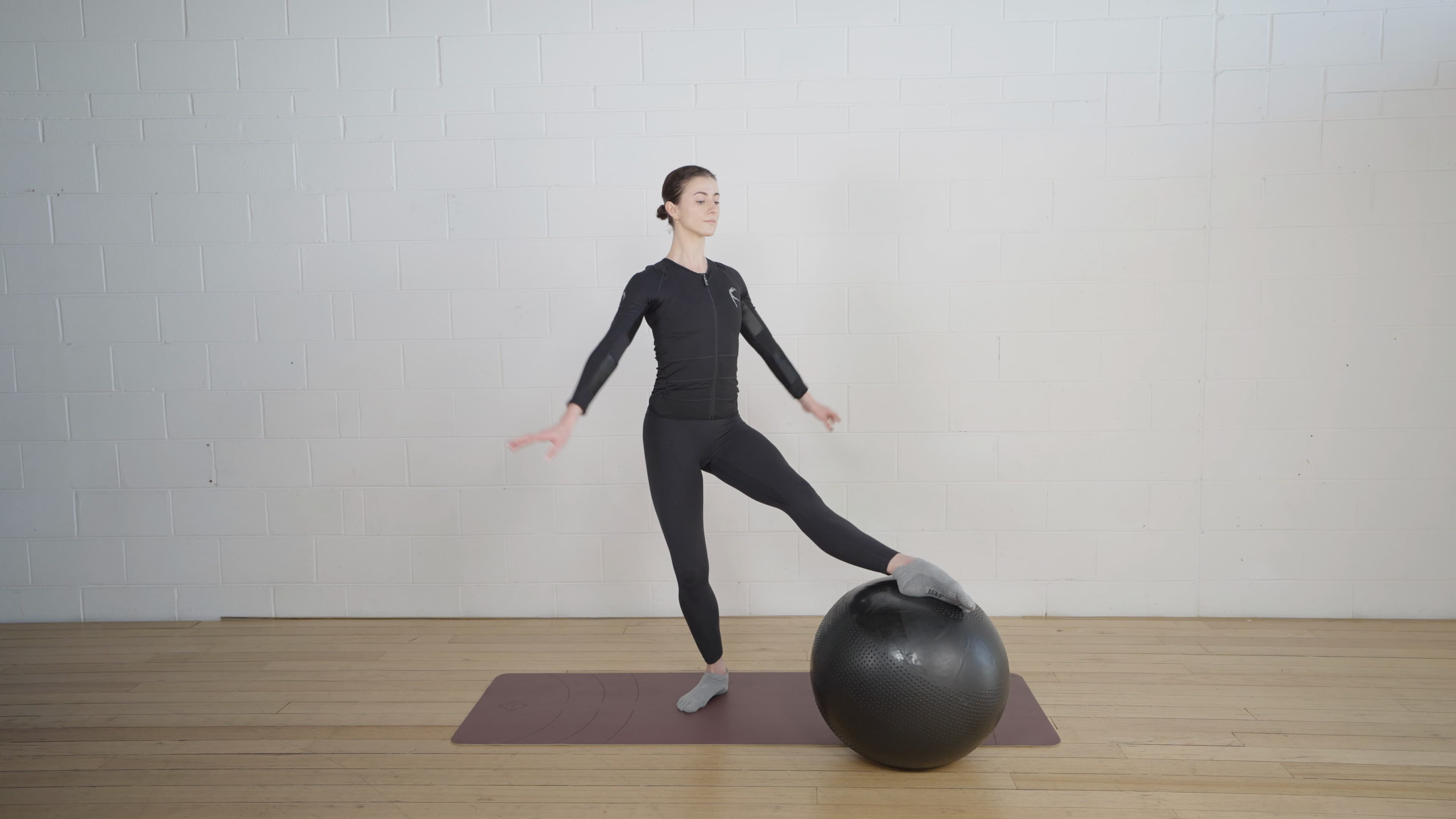
Upper Body & Penchée
 Advanced | Adage
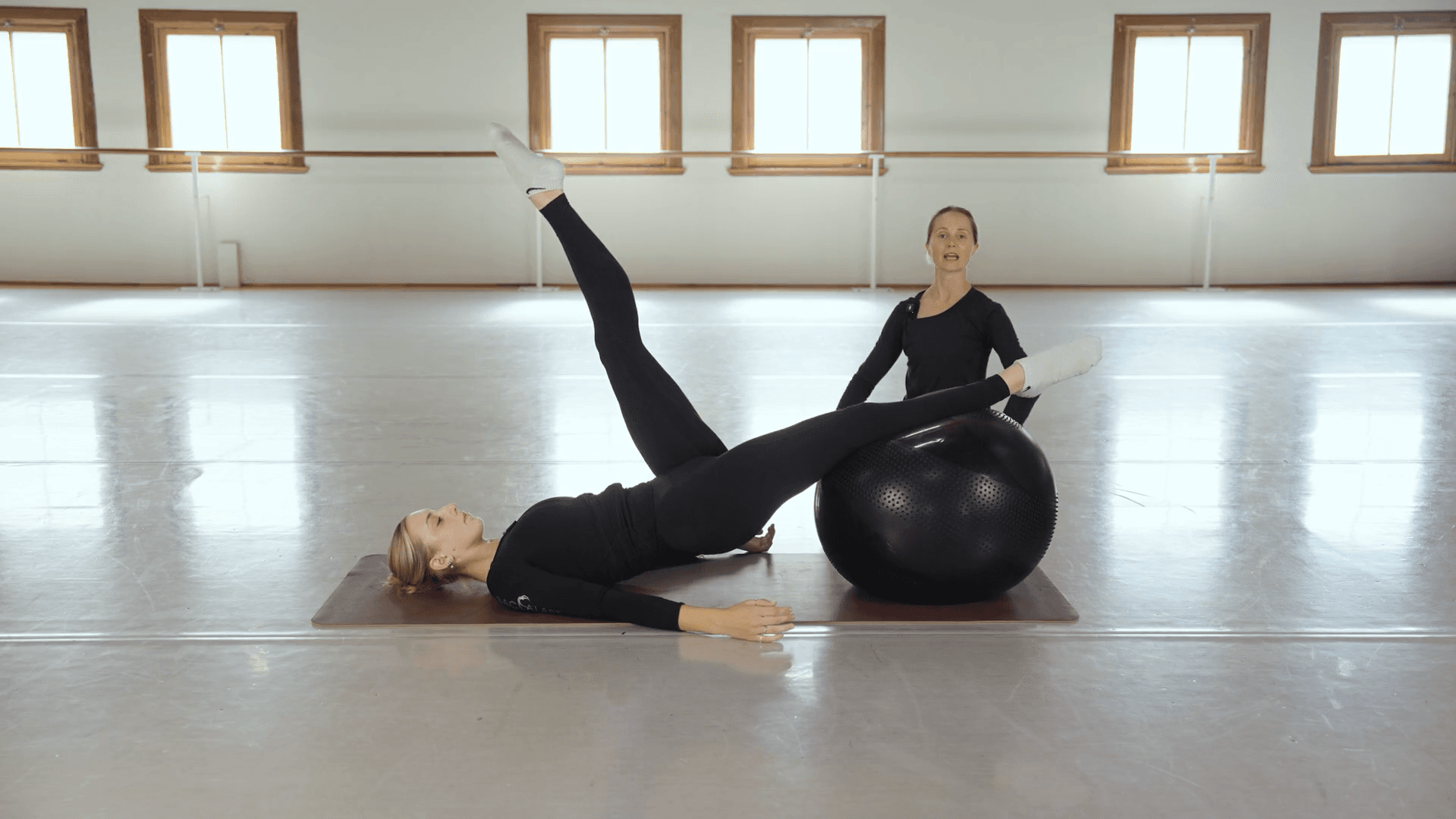
Power in Balance
 Advanced | Adage
Adagio – Extension 1
 Advanced | Adage
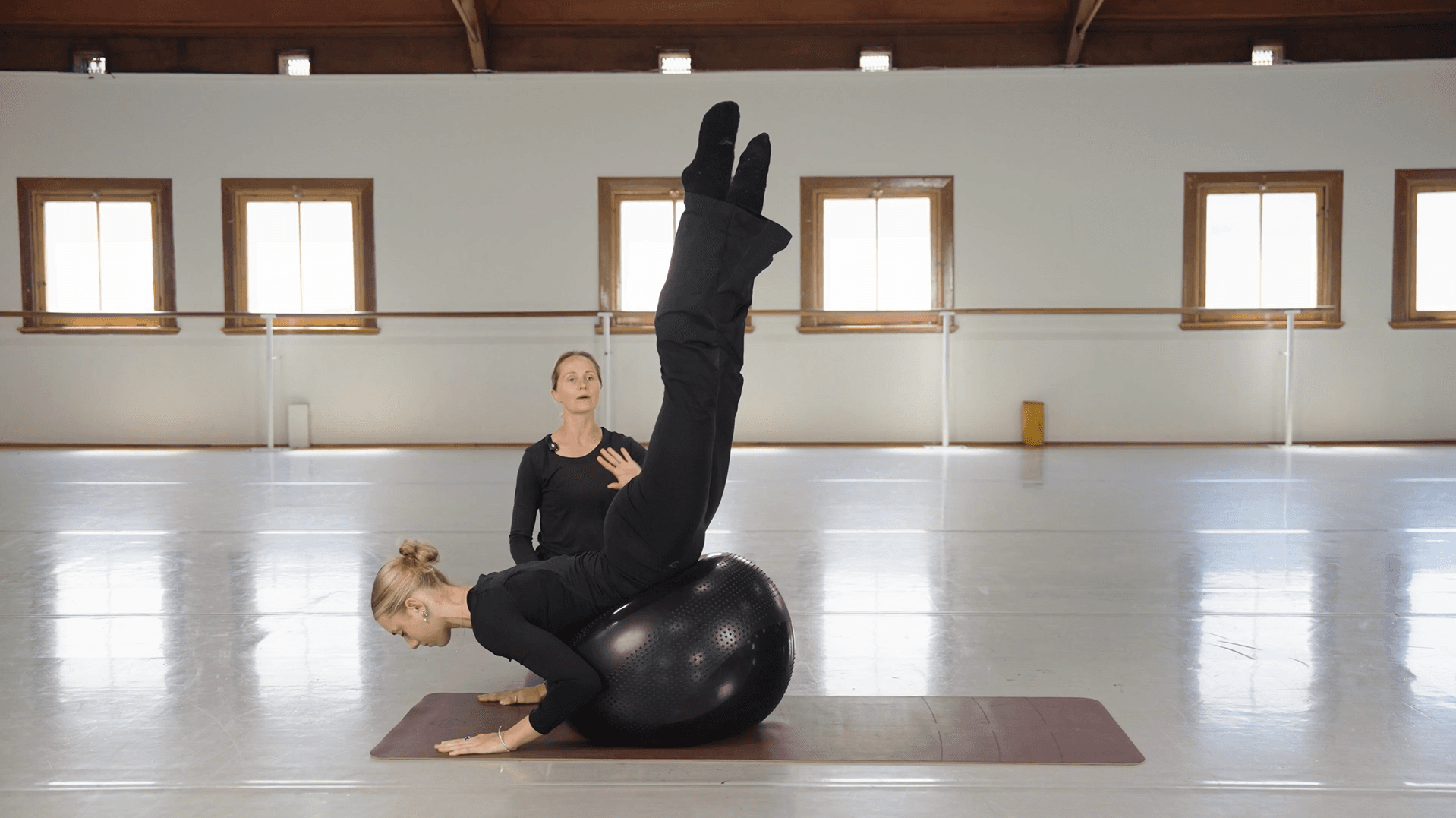
Adagio – Extension 2
 Advanced | Adage
Spinal Release
 Advanced | Adage
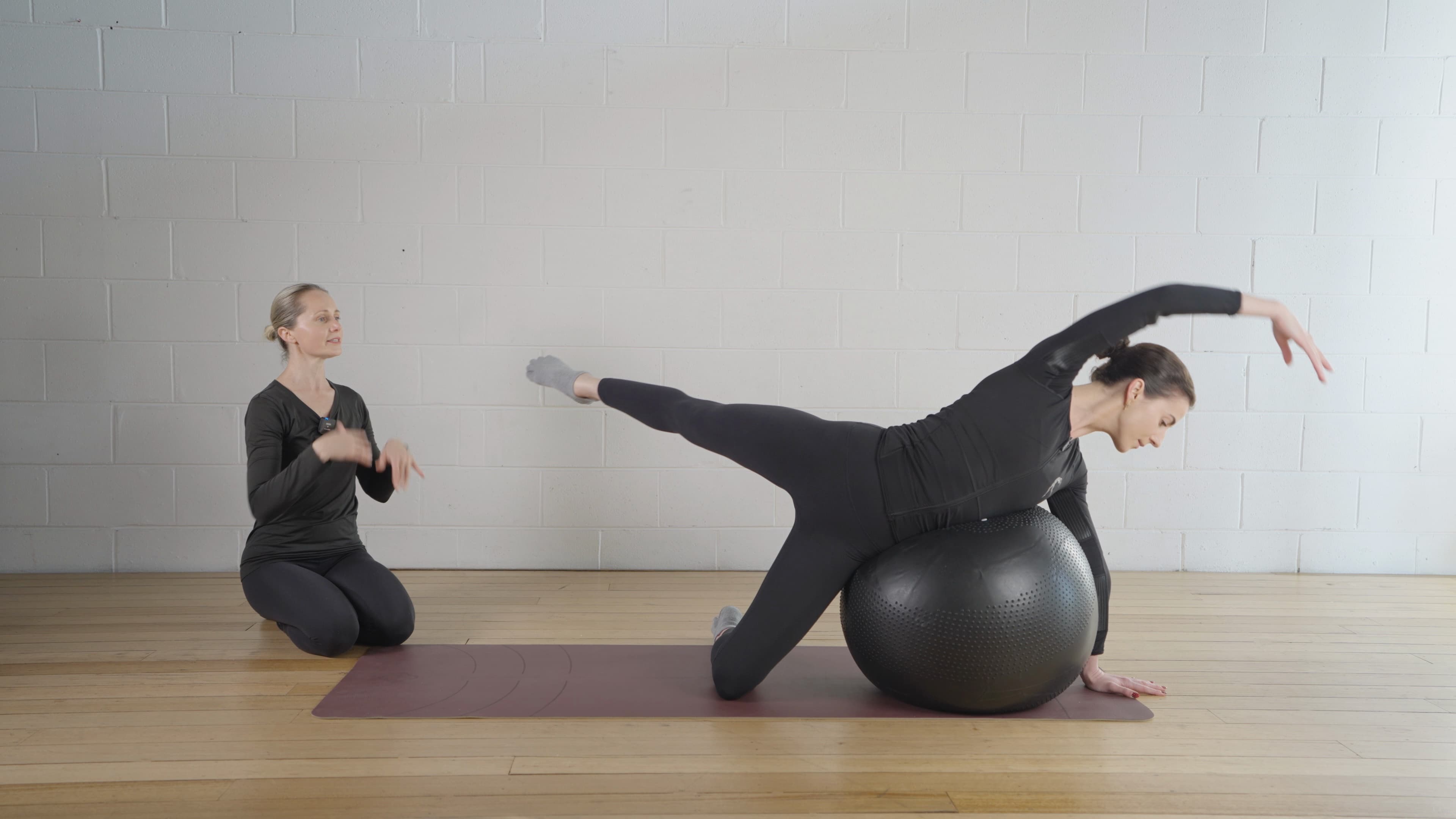
Adagio – Extension 3
 Advanced | Adage
Freedom in Adage
 Advanced | Adage
Lengthening the Adductors
 Advanced | Adage
Arabesque Recovery
Music Used
Ancient Future
Equipment Used

Exercise Ball / Fit Ball
Wall
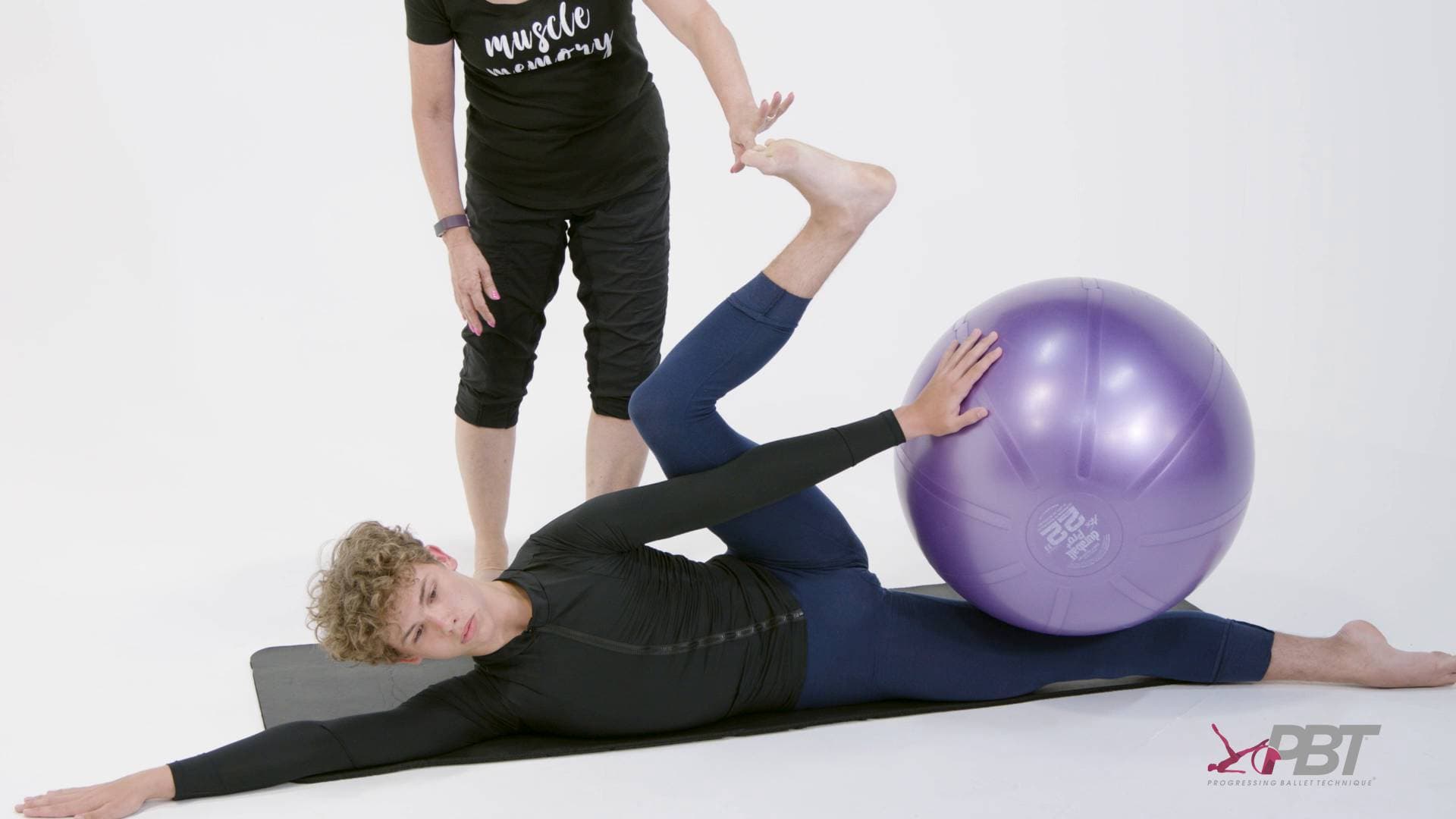
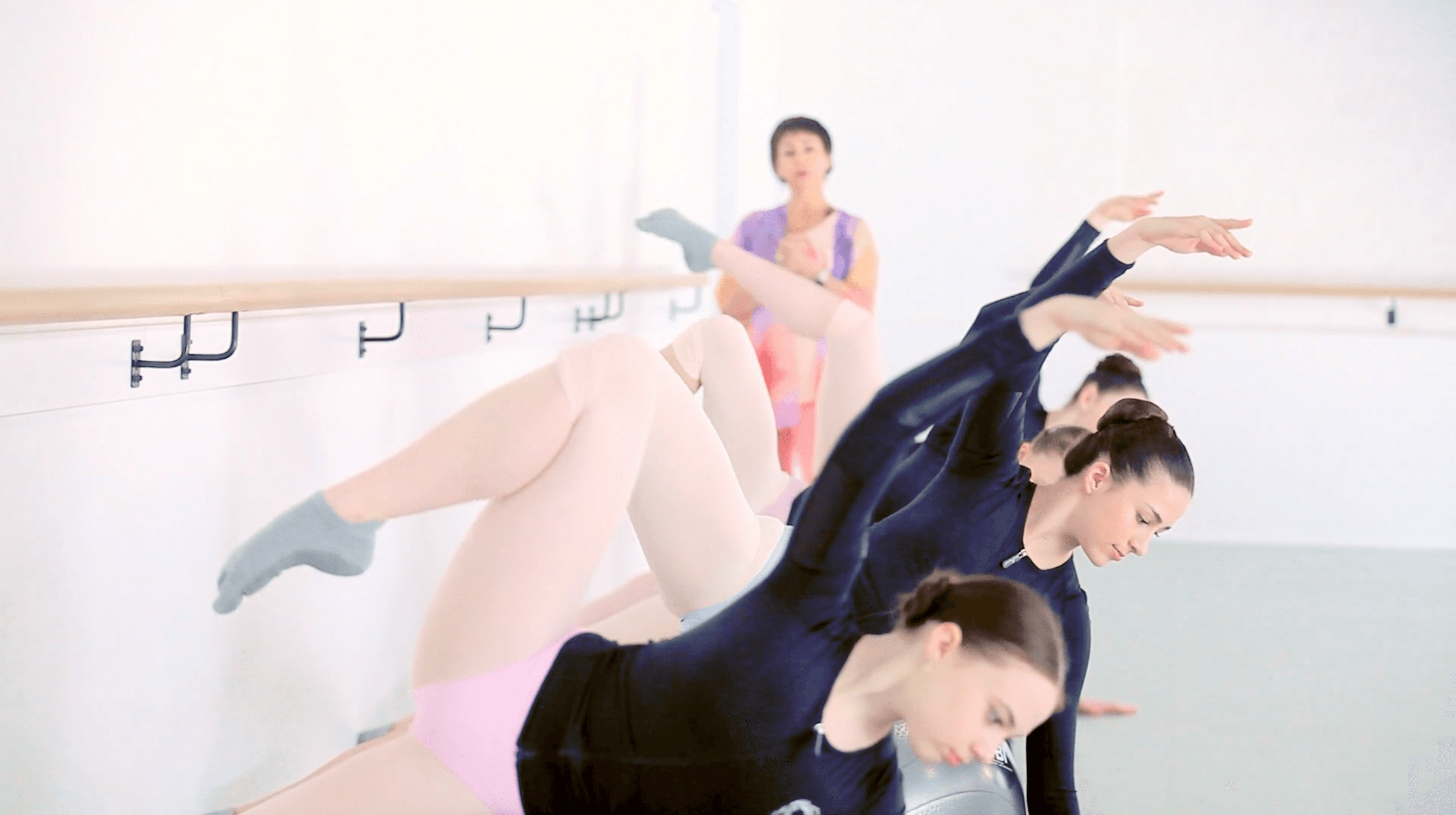
This exercise strengthens and activates the abdominal and oblique muscles, essential for a strong and graceful port de bras. This exercise also enhances thoracic spine mobility, crucial for dancers to maintain correct posture and alignment. By incorporating a side bend with adage movements, students can develop muscle memory that translates directly into their ballet technique, improving the quality of their port de bras and overall expressiveness in adage sequences.
Preparation:
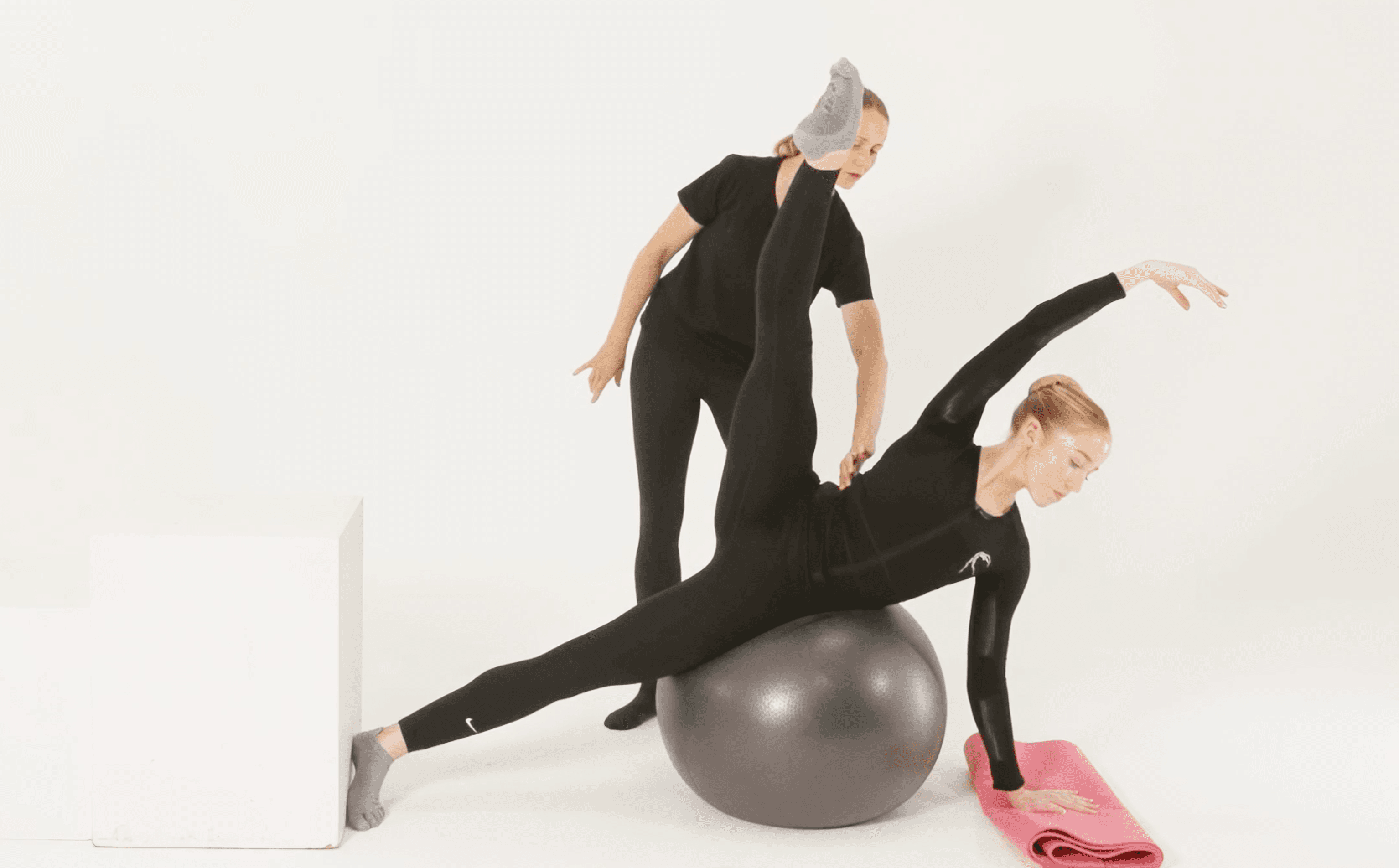
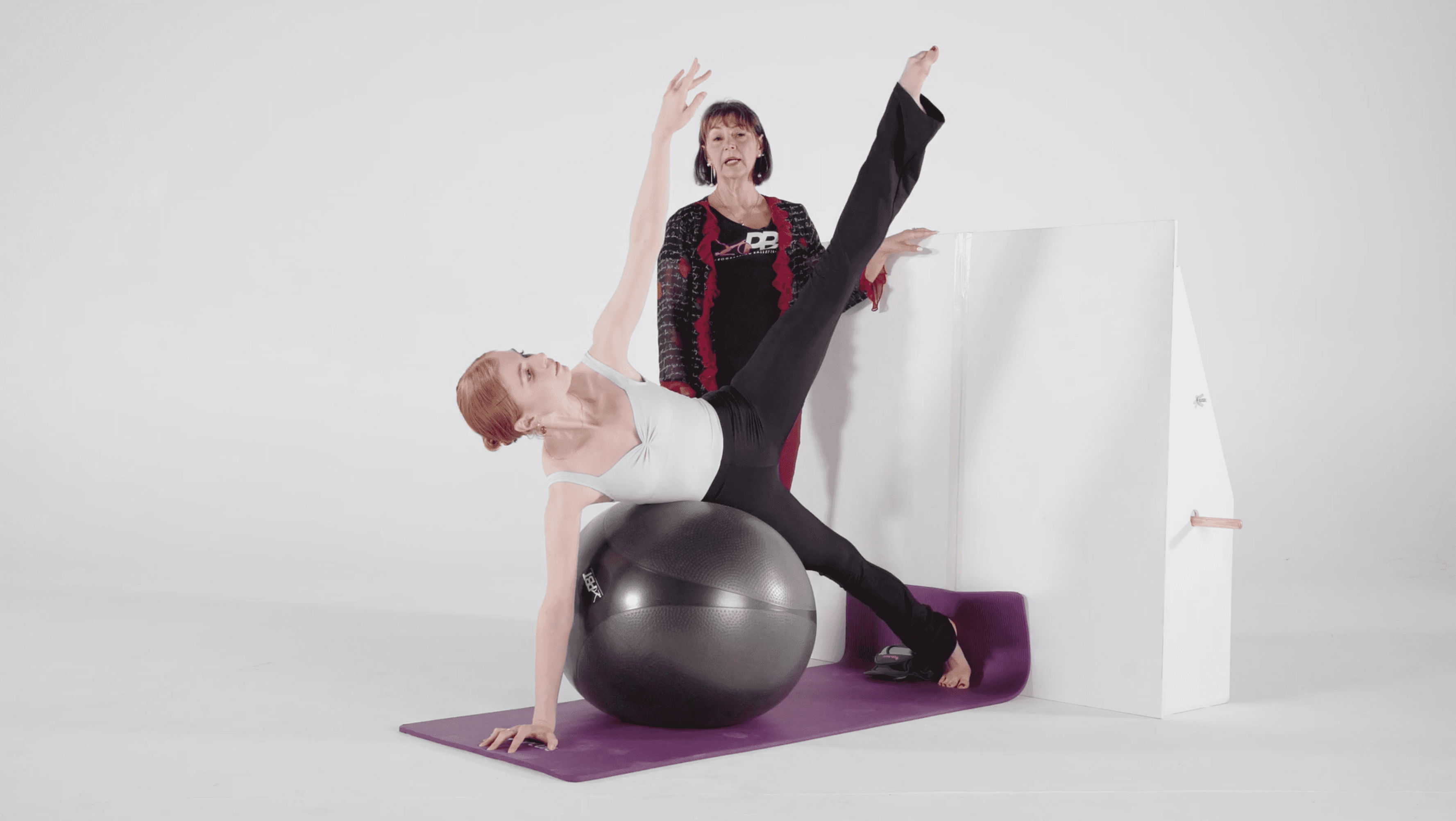
For beginners or those needing additional stability, start with one foot in front of the other against the wall. This provides extra support as they focus on the upper body's movement and alignment. A rolled-up mat can support the wrists if required.
Steps:
1. Begin with port de bras, integrating a side bend to engage the abdominals and obliques fully. Emphasise the importance of pulling down through the thoracic spine to foster a deep connection with the core muscles. Complete three sets.
2. Instruct students to rotate both legs, resting the working foot in sur le cou-de-pied. As they draw the working leg into a développé écarté, remind them to breathe deeply and maintain thoracic engagement.
3. Follow this with ronds de jambe en l’air en dehors, keeping the core and rotators activated, then slowly enveloppé back to sur le cou-de-pied.
4. Have students switch sides and repeat.
Focus:
Maintain a focus on core engagement, thoracic spine alignment, and the fluidity of movement throughout the exercise. The integration of breath with movement is key to achieving the desired fluidity and ease.
Frequently asked questions
Comments and Questions
Sign up to our newsletter
Receive tips, news, and advice.

Copyright © 2025 Progressing Ballet Technique. All Rights Reserved