Balance with Control
Advanced
Weight Placement
Share
 Advanced | Weight Placement
Value of the supporting leg
 Advanced | Weight Placement
Alignment Extension
 Advanced | Weight Placement
Challenge Your Balance
 Advanced | Weight Placement
Alignment Stability
 Advanced | Weight Placement
Upper Body with Alignment
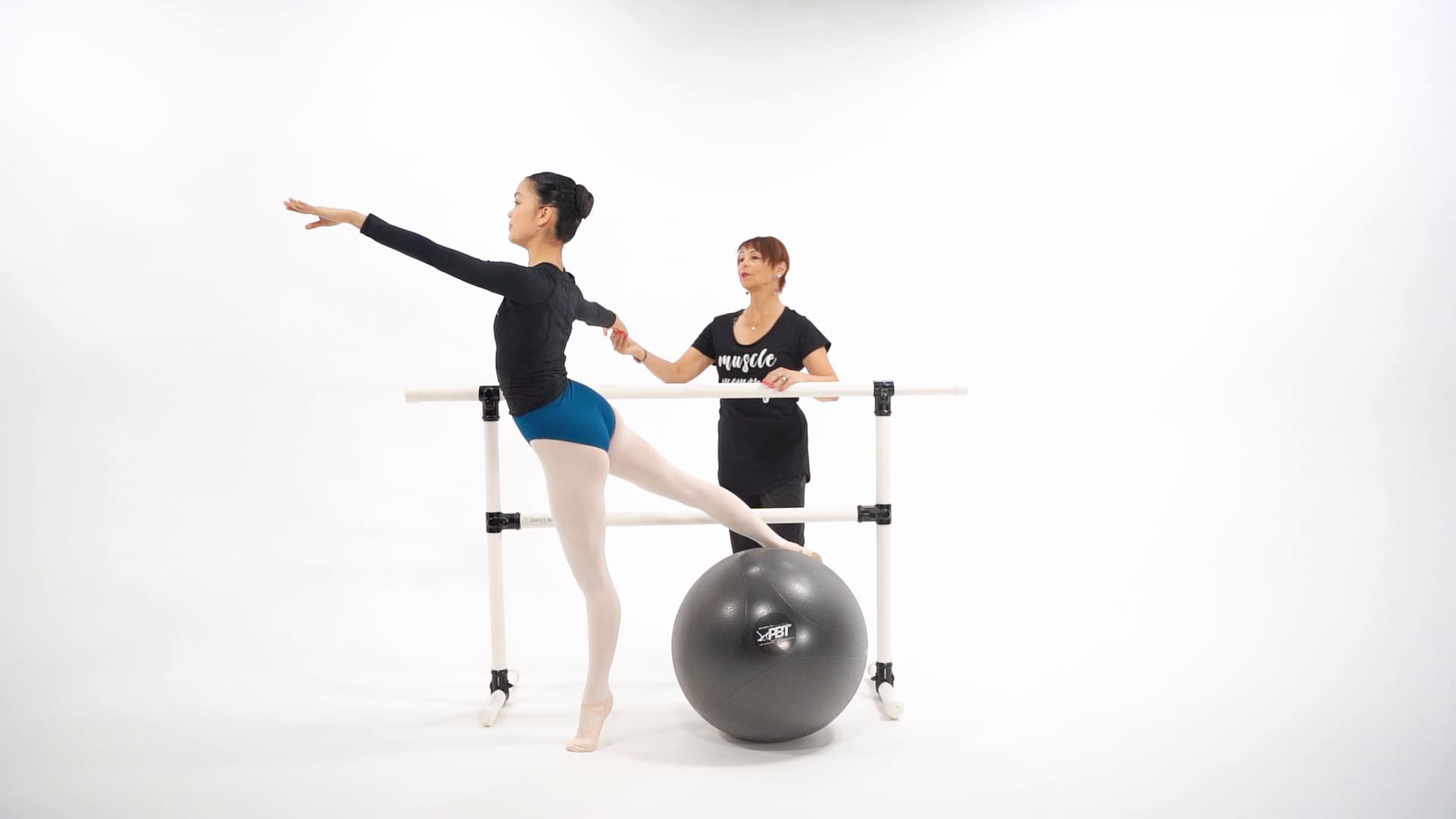 Advanced | Weight Placement
Weight Placement Check
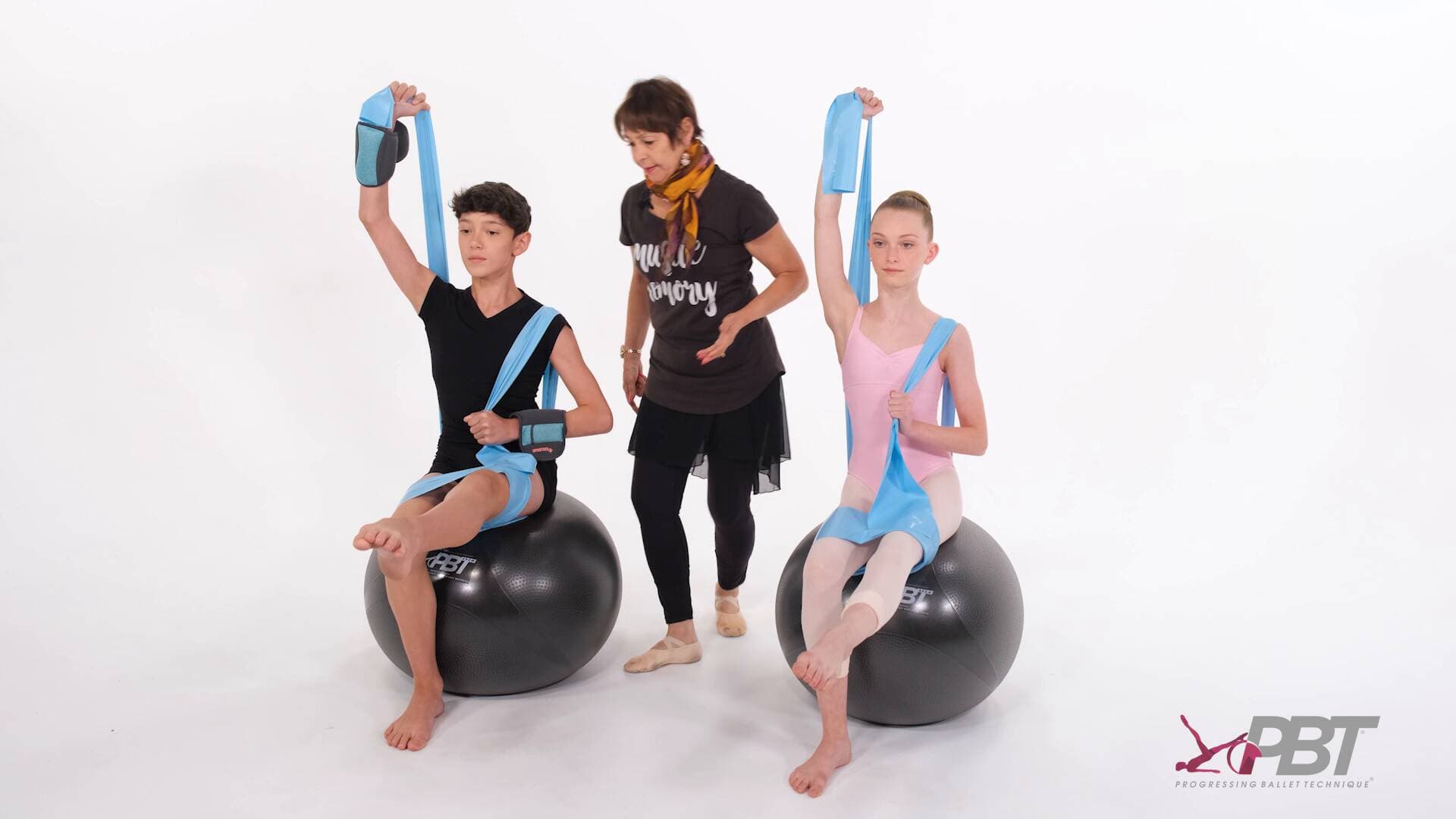 Advanced | Weight Placement
Resistance Band Leg Lifts
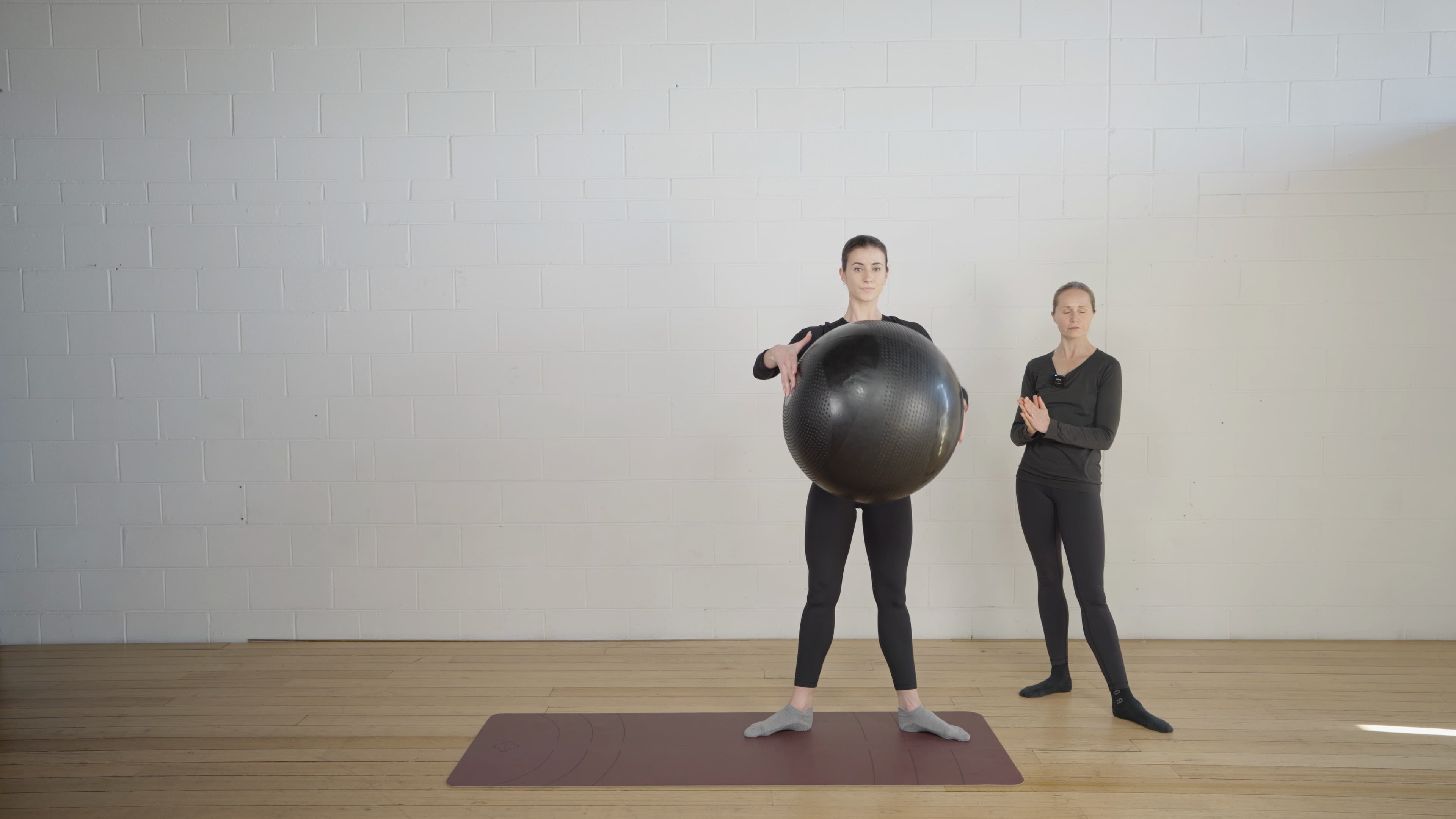 Advanced | Weight Placement
Controlled Placement
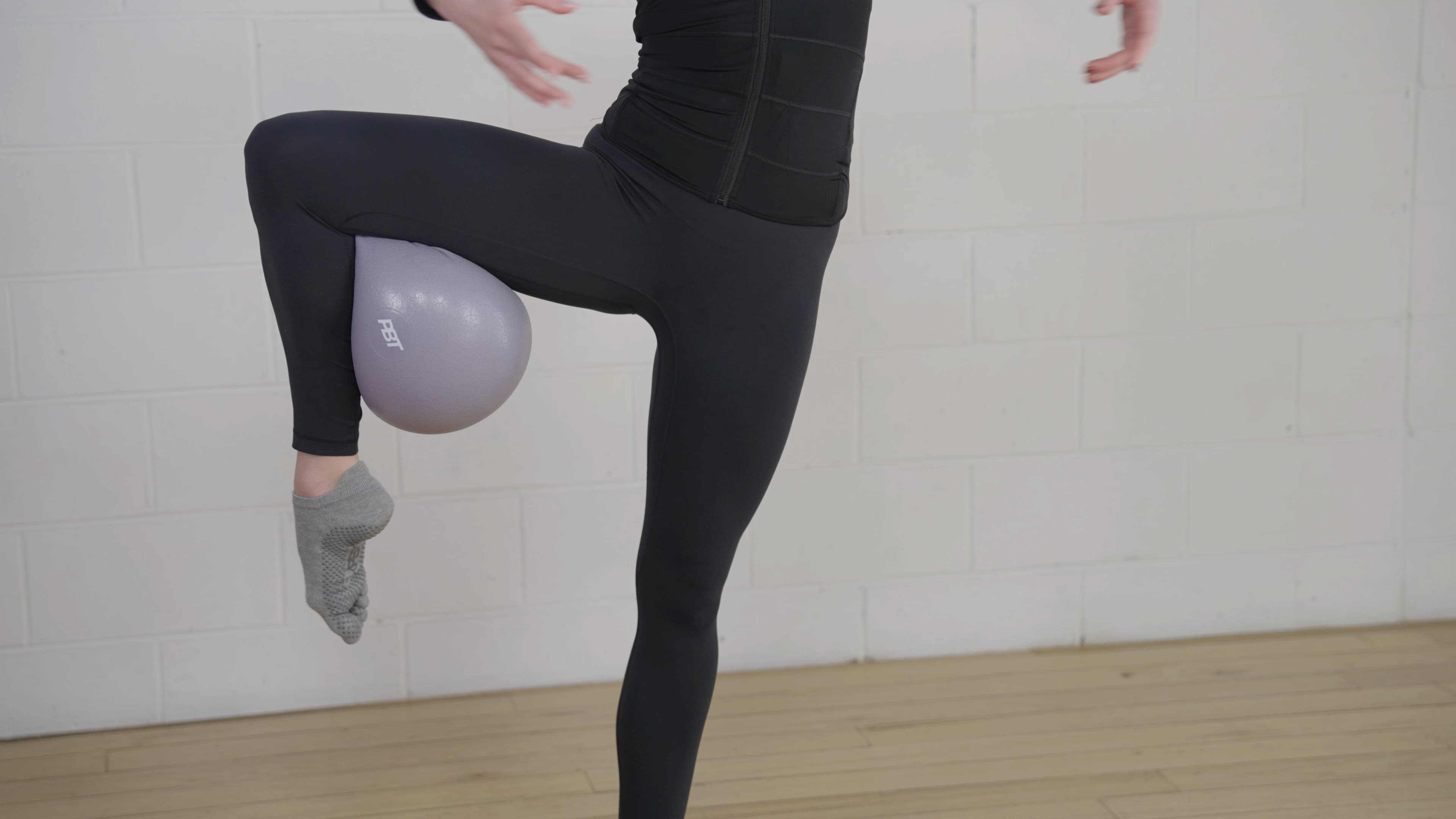 Advanced | Weight Placement
Balance for Pirouettes
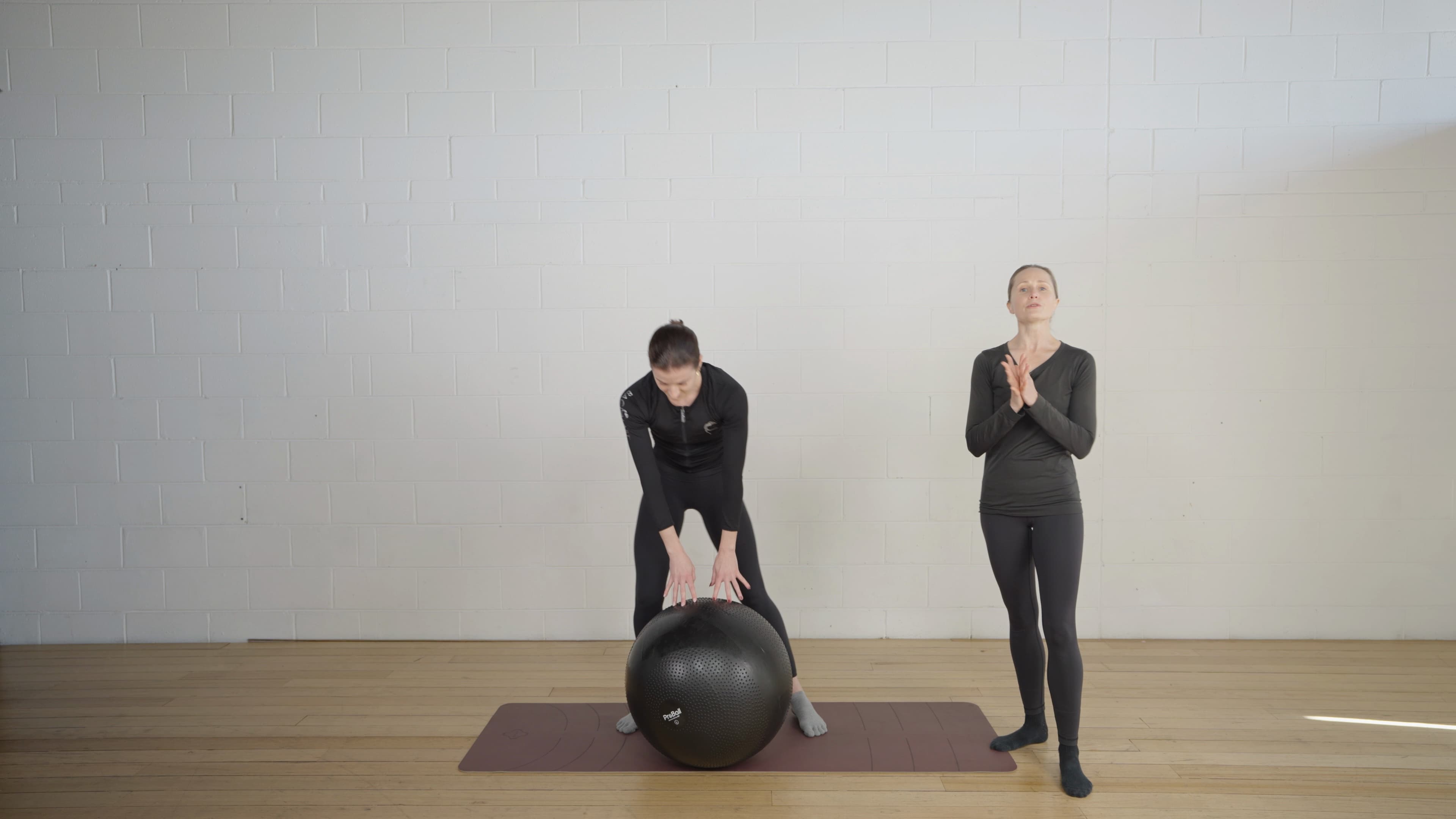 Advanced | Weight Placement
Controlled Placement – Level 2
 Advanced | Weight Placement
Power in Weight Placement
 Advanced | Weight Placement
Control with Stability
 Advanced | Weight Placement
Relevé Transitions
Music Used
Don Quixote Basilio’s entrance | Ballet Class App
Equipment Used

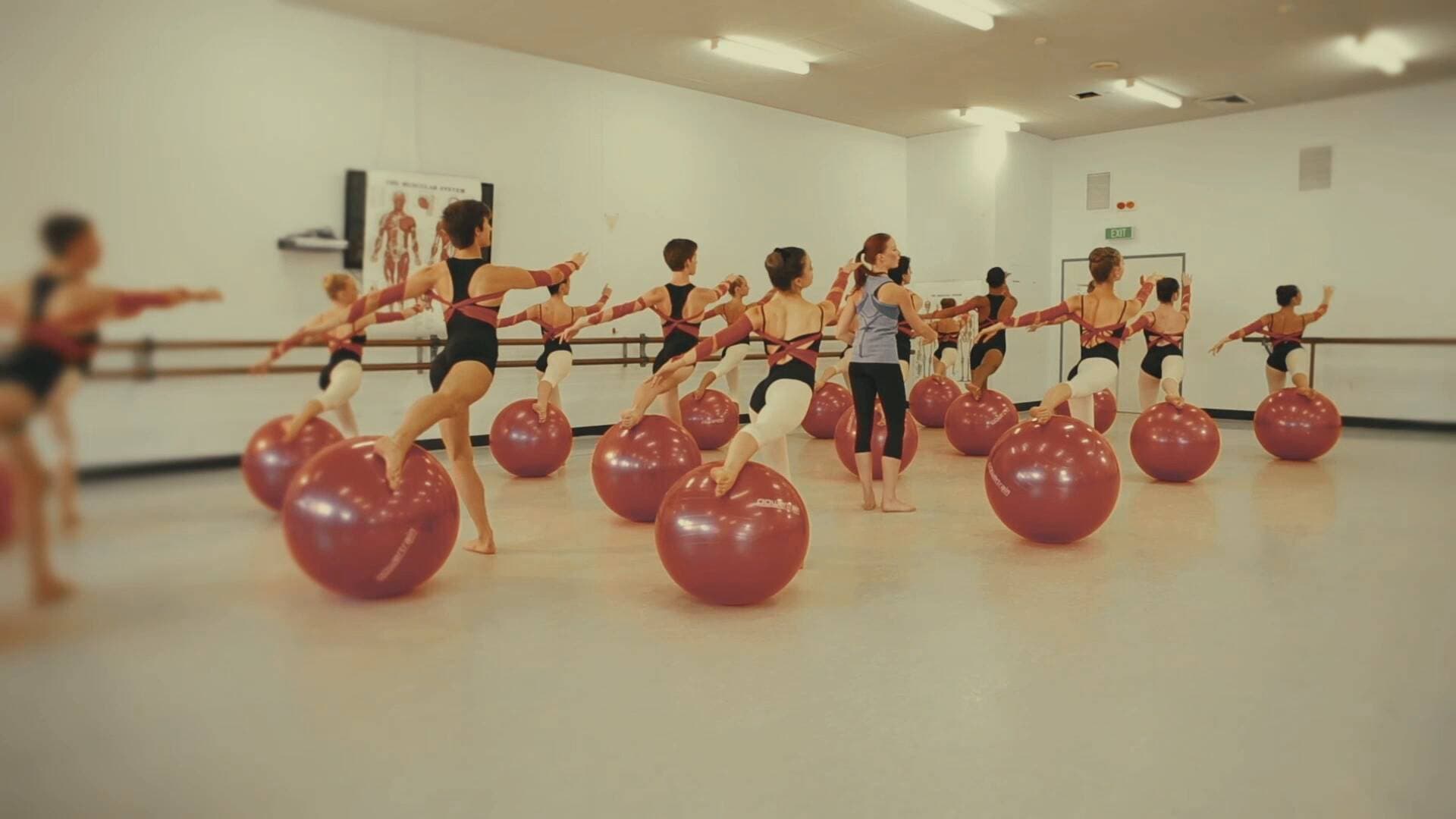
Exercise Ball / Fit Ball
This exercise reinforces the significance of pelvic stability as the foundation for controlled balance and effortless movement in dance. It underscores the essential concept that, particularly during a rise (elevé), the centre of gravity must be meticulously positioned between the first and second metatarsals to facilitate the smooth transfer of weight throughout the dancer's body. This exercise not only enhances balance but also integrates the coordination of upper and lower body movements, crucial for executing complex ballet sequences.
Preparation:
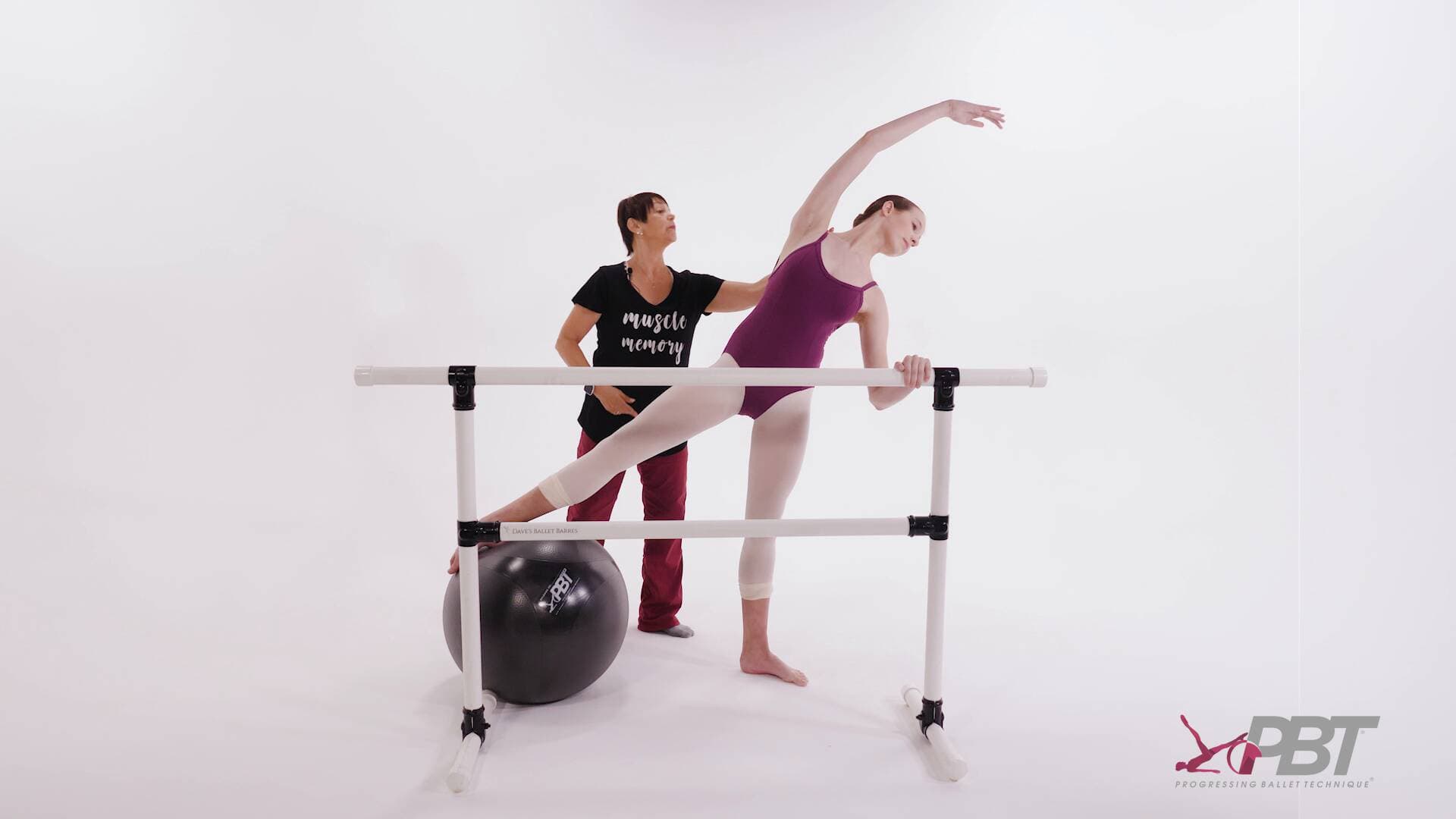
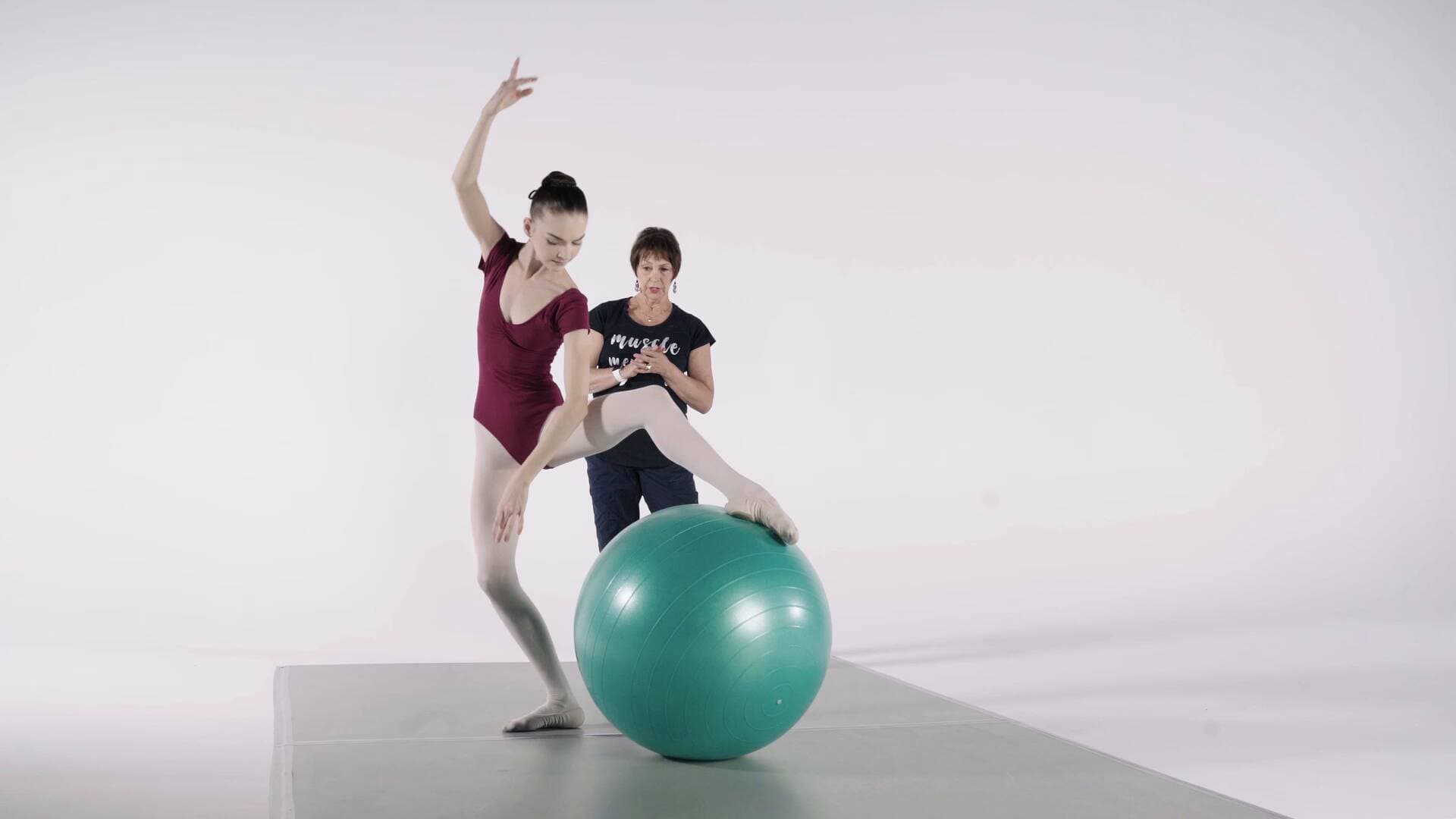
Have students begin in an effacé devant position with the right leg placed on the fit ball. This setup encourages the engagement of the core and lower body muscles essential for maintaining balance.
Steps:
1. Instruct students through a sequence that includes a port de bras from first to fourth position, a fondu (plié) with the upper body leaning forward as the working leg moves into attitude devant. The body recovers and the student adjusts into a cambré and recover. Repeat this movement.
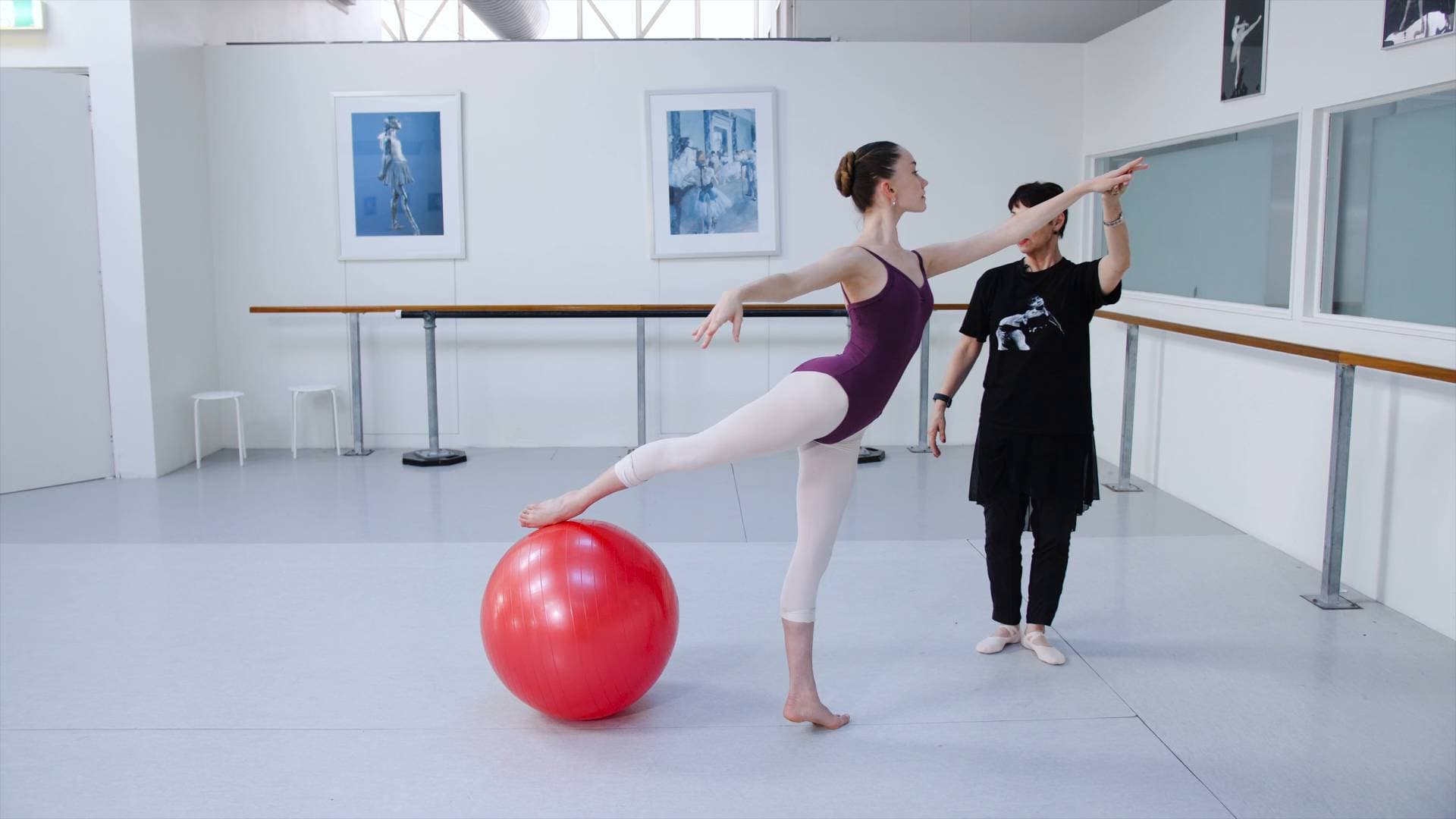
2. The student lifts their working leg as they face the side and slide the ball forward as they adjust into an arabesque balance. The use of the fit ball introduces an element of instability, forcing the dancer to focus on control and precision.
3. They glide back bring the ball in front of their body. Lift the ball as they stand upright in a pirouette position. Rise and balance.
4. They close the foot behind and reset on the alternate side and repeat.
Focus:
Encourage a stable pelvis and aligned centre of gravity throughout the exercise. Highlight the role of the supporting leg and maintaining an engaged core in achieving a seamless transition between movements.
Frequently asked questions
Comments and Questions
Sign up to our newsletter
Receive tips, news, and advice.

Copyright © 2025 Progressing Ballet Technique. All Rights Reserved